
The defined clinical-education quality system
The operating system used to plan, govern, deliver, assess, evaluate and improve consequential clinical or professional education.
At a glance
Eligibility review is free. You pay nothing until eligibility is confirmed and an agreement is signed.
For health systems, clinical education units and professional societies — independent review of whether your clinical education is designed, assessed and evaluated to change practice, not just record attendance.
501(c)(3) nonprofit · Standards published · Independent decision · Publicly verifiable
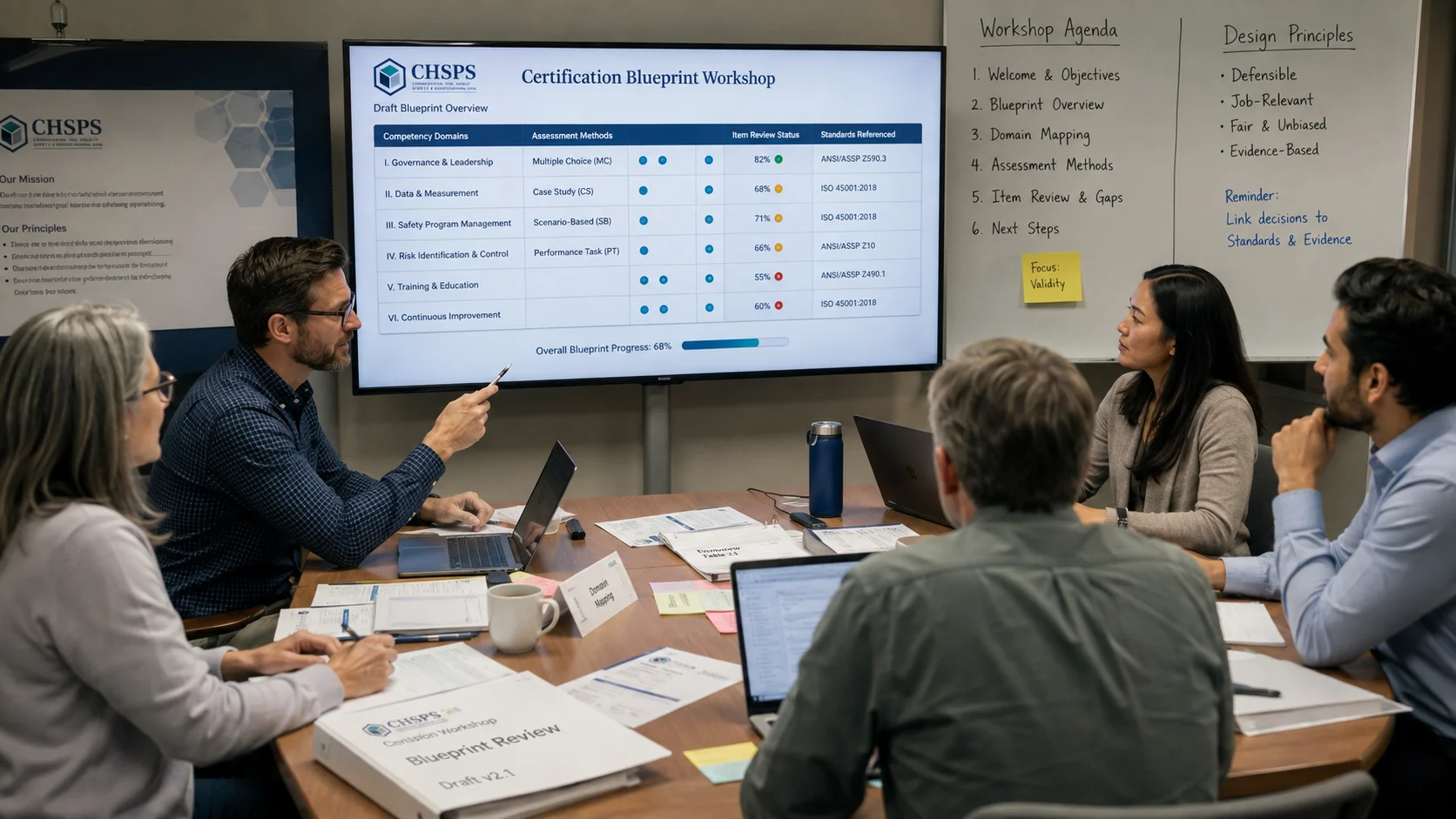
Choose CEQ when the organization needs independent review of how clinical or professional education is designed, controlled, assessed and linked to competence, practice, quality or safety outcomes.
CEQ is not simply provider approval and it is not accreditation of one standalone course. It evaluates the quality system behind a defined clinical-education portfolio or operating unit.
Needs, objectives, content, faculty, assessment, outcomes and improvement.
Provider-level governance and delivery infrastructure across offerings.
Course-level design, delivery and assessment.
Workplace learning is itself part of the educational pathway.
Qualification, competence, reassessment and authorization for assigned work.
Accreditation applies only to the system, program family, operating unit and activities written into the approved scope and public verification record.
The operating system used to plan, govern, deliver, assess, evaluate and improve consequential clinical or professional education.
Needs assessment, objectives, content control, faculty, delivery, simulation, assessment, completion, transfer to practice, outcomes and improvement.
Individual learners, the health system as a whole, unrelated education, professional licensure and degree-granting approval are outside CEQ scope.
Edition 2026.1 · continuous eligibility intake · 3-year accreditation term.
The page summary supports decision-making; the controlled CEQ-510 standard remains authoritative.
Accountability, scope, quality oversight and program review.
Documented gap and audience analysis that drives education design.
Observable learning or performance objectives aligned to the identified need.
Current evidence, review cycles and control of outdated content.
Methods appropriate to objectives, learner level and delivery environment.
Qualification, orientation, performance review and conflict controls.
Disclosure, mitigation and separation from promotional interests.
Scenario design, equipment, safety, debriefing and assessor consistency.
Valid methods aligned with objectives and defined passing or completion rules.
Reliable attendance, assessment and certificate issuance records.
Learner support and reasonable access to the educational experience.
Structured follow-up on application of learning in practice.
Learning, competence, performance and safety outcomes as appropriate.
Auditable learner, faculty, assessment and outcome data.
Use of data to revise content, methods and quality controls.
The CEQ model combines document review with source evidence, interviews, demonstrations and end-to-end tracers.
The eligibility review is free. Formal application begins only after CHSPS confirms that CEQ is the appropriate pathway and the proposed scope is reviewable.
Pathway and scope fit confirmed first.
Application fee credited to the initial specialty review.
Remaining initial-review balance.
The same institutional separation applies across CHSPS accreditation: scope first, evidence next, independent decision after technical review.
Confirm that CEQ fits the education system and proposed scope before fees are due.
Define the clinical-education system, program family, sites or operating unit included in review.
Submit needs analyses, objectives, content controls, faculty records, assessments, completion records, outcomes and improvement evidence.
CHSPS reviewers test implementation through documents, source records, interviews, demonstrations and tracers.
Address any gaps with documented correction and evidence of implementation.
The final accreditation decision is made independently from applicant support and technical review.
Approved scope is published and maintained through annual reporting, material-change duties and renewal.
External evaluation of the controls behind consequential clinical and professional education.
Review links identified needs to objectives, assessment, practice transfer and outcome evidence.
Faculty, evidence currency, commercial influence, accessibility and assessment controls are tested.
The exact accredited CEQ scope can be inspected through CHSPS public verification.
Choose CEQ when the central question is whether a clinical/professional education system reliably changes competence, practice, quality or safety. Choose EDP for a provider-wide education operating system, COURSE for one offering, WBL for structured workplace learning, or WCA for employer competency authorization.
Accreditation is a continuing relationship. ACC-109 governs the common maintenance cycle while CORE-100 + CEQ-510 continues to govern the accredited scope.
Annual reporting confirms continuing operation and relevant changes.
Notify CHSPS before changes that could affect conformity.
Renewal confirms current implementation and performance, not a blank restart.
Interpretation safeguard. CHSPS reference criteria are controlled technical references, not observed market averages and not automatic accreditation thresholds unless a normative CHSPS clause expressly incorporates a value.
Sampled objectives with a directly aligned assessment method.
Active educational content reviewed within the defined currency interval.
Sampled completion records agreeing with source attendance and assessment data.
Approved learner accommodations delivered as authorized.
Eligible learners included in a structured practice-transfer assessment.
Education quality actions closed with documented effectiveness review.
The controlled standard defines the normative requirements. Preparation resources are optional and do not affect findings or decisions.
CHSPS education is optional, separately operated and has no influence on accreditation findings or decisions.
$5,500 for the initial specialty review: the $1,250 application fee when you sign the applicant agreement, then the $4,250 review balance when you submit evidence. After that, $1,500 a year and a $3,500 renewal review every 3 years. A concurrent additional specialty scope in the same organization is $2,750. The eligibility review is free.
The free eligibility review targets a written outcome within 10 business days after a complete inquiry. CHSPS does not publish a single planning target for this pathway; the review timeline is stated in writing at scope confirmation, before you pay anything.
Nothing to upload. Step 1 asks only for your name, email and organization; the rest of the form covers scope, operating status and readiness, in about 5 minutes. Formal evidence comes after the agreement is signed: needs analyses, objectives, content controls, faculty records, assessments, completion records, outcomes and improvement evidence.
Yes. CHSPS is a United States–based 501(c)(3) nonprofit; organizations in any country may apply.
Every eligibility review ends in a written outcome: Eligible, Potentially Eligible — Additional Information Required, or Not Eligible, with the specific thresholds not yet met. There is no charge for the review, and if a different CHSPS pathway fits better, the review says so.
Confirm that Clinical Education Quality Accreditation is the right pathway and define the reviewable scope before application fees are due.
CHSPS is an independent accreditor. CHSPS is a United States–based 501(c)(3) nonprofit; organizations in any country may apply.